Enginerring
Solution

Our focus at hansaconsult providing worldwide, economical safety solutions for the aviation fuel business. Our clients benefit in all project stages from competent consulting of our experienced team.

Design Over the Facility’s Life Cycle

Our focus at hansaconsult providing worldwide, economical safety solutions for the aviation fuel business. Our clients benefit in all project stages from competent consulting of our experienced team

Masterplan / Feasibility Study

Basic Engineering

Front End Engineering & Design

Detail Engineering

Procurement

ENGINEERING

Our focus at hansaconsult providing worldwide, economical safety solutions for the aviation fuel business. Our clients benefit in all project stages from competent consulting of our experienced team

Design Over The Facility‘s Life Cycle

Our focus at hansaconsult providing worldwide, economical safety solutions for the aviation fuel business. Our clients benefit in all project stages from competent consulting of our experienced team.

Solutions To Meet Your Targets

Our focus at hansaconsult providing worldwide, economical safety solutions for the aviation fuel business. Our clients benefit in all project stages from competent consulting of our experienced team.

Fuel Demand & Consumption

Calculating fuel demand is crucial for aviation fuel infrastructure planning. At hansaconsult, we use proven methods and collaborate with airports to determine values based on growth plans and air traveler forecasts.

Fuel Storage Capacity

Fuel farms are one of an airport’s most critical facilities. They are designed to withstand several days of demand without receiving external fuel supplies. A failure at these sites could ground aircraft and consequently lead to damages to passengers

Hydraulic Simulation

We are committed to a safe and economic handling of fuel. To control the inherent risks we have developed the simulator Kleopatra® for operators of fuel farm and hydrant systems, technical authorities and insurance companies.

Automation & Control

Competent design ensures economic and energy saving systems in full compliance to international approved standards and local regulation. Safety in a hazardous environment is the focus of our solutions.

Stress Analysis

Pipe stress analysis provides the necessary technique for engineers to design piping systems without overstressing & overloading the piping components & connected equipment.

Tightness Control System

The world-wide patented state-of-the-art and the absolutely reliable leak detection procedure. TCS® Tightness Control System has been developed in 1982, especially for operation at Frankfurt Airport and is now proven at many airports worldwide.

Hydrant Systems

All our Airfields work are planned and designed in 3D environment in order to be part of the overall BIM model of the airfield utilities.

Aviation Fuel Infrastructure Design

The Logical Model of the Fuel Depots are efficiently modeled into a full 3D Design layout, where suitability and fit can all be tested in a virtual world.
Solution to Meet Your Targets
Our focus at hansaconsult providing worldwide, economical safety solutions for the aviation fuel business. Our clients benefit in all project stages from competent consulting of our experienced team.

To ensure fuel quality

To ensure fuel safety

To control construction cost

To control construction quality

To monitor tightness integrity

To save energy

To control construction time

Fuel Demand & Consumption
Accurately forecasting fuel demand is crucial for planning aviation fuel infrastructure, utilizing proven methods alongside airports and developers.

Calculating the actual and foreseen fuel demand/Consumption is key parameter for the planing of the aviation fuel infrastructure. The exercise is very complex due to the various parameters. At hansaconsult we utilize proven methods that consider all available resources and data inputs. We work side by side with airports and airports developer to determine the most adequate values based on airport growth plans and forecast predictions for air travelers to determine the uplift values
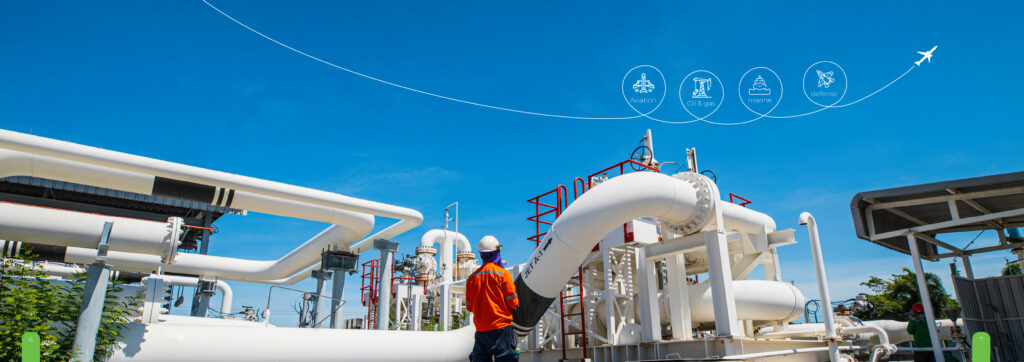
As far as possible, the anticipated aircraft mix (at least in terms of narrow bodied and wide bodied aircraft), the destinations, schedule and typical fuel uplifts should be obtained.

If little or no information is available then initial estimates could be made by comparison of the proposed size of the airport facilities (especially number of runways and terminals) with existing airports of a similar size and utilization.

A factor that should also be considered is the differing fuel uplifts and ground times for domestic (smaller, but frequent, uplifts) and international long-haul flights, schedule and charter services (seasonal peaks) and passenger and cargo aircraft (likely to park in remote apron areas). An assessment should also be made of the possibility of airlines ‘tankering’ and the likely effects this would have on the volumes.

Fuel Storage Capacity
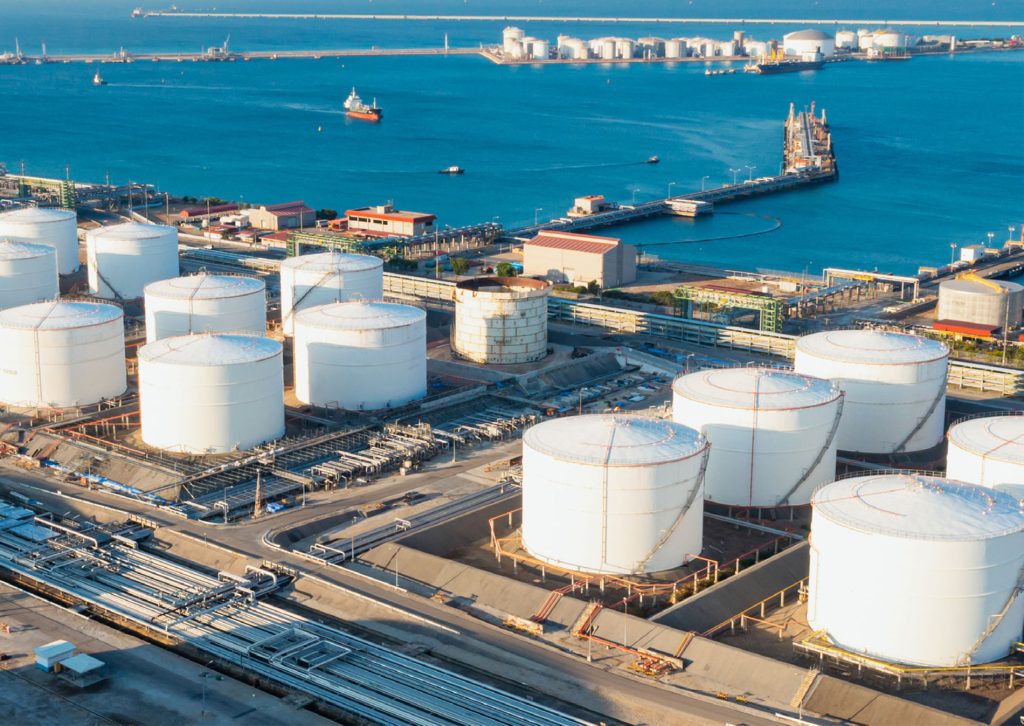
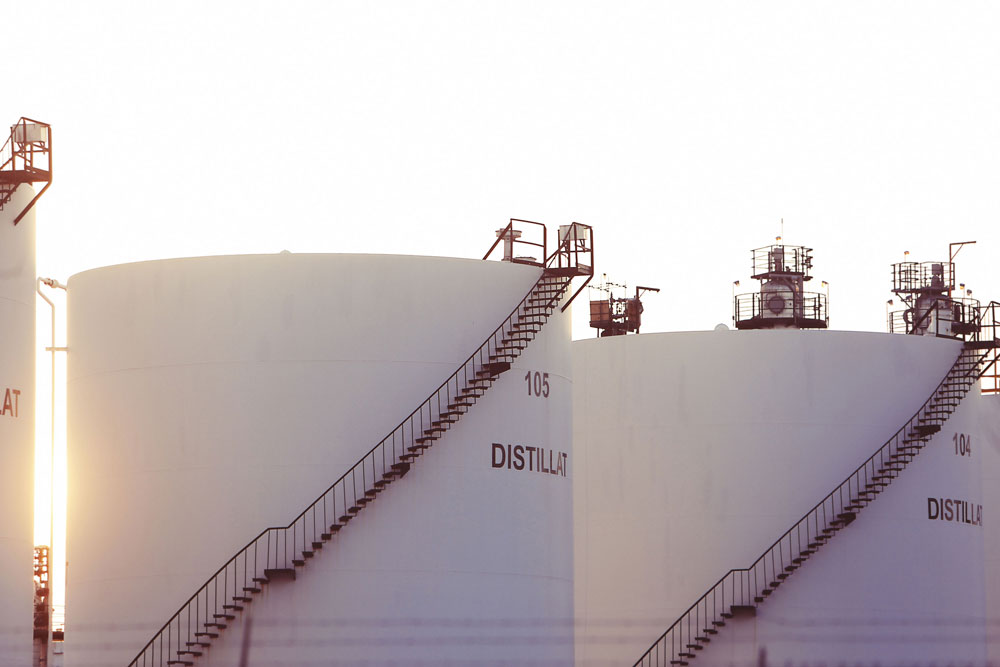
Fuel farms are one of an airport’s most critical facilities. They are designed to withstand several days of demand without receiving external fuel supplies. A failure at these sites could ground aircraft and consequently lead to damages to passengers

Sizing of Storage Tanks

Determination of the number and size of storage tanks is usually one of the first design tasks to be undertaken once initial and long term fuel through puts have been established.

Fuel supply reliability has a major impact on financial and operational viability of flights. Airport fuel infrastructure forms a vital part of the fuel supply chain. While at most airports the fuel facility appears to be adequate, some airports are perceived to have insufficient or excessive facilities. In case of supply disruptions, insufficient capacity could result in non-availability of jet fuel. Insufficient storage capacity may also add pressure on ensuring fuel quality.

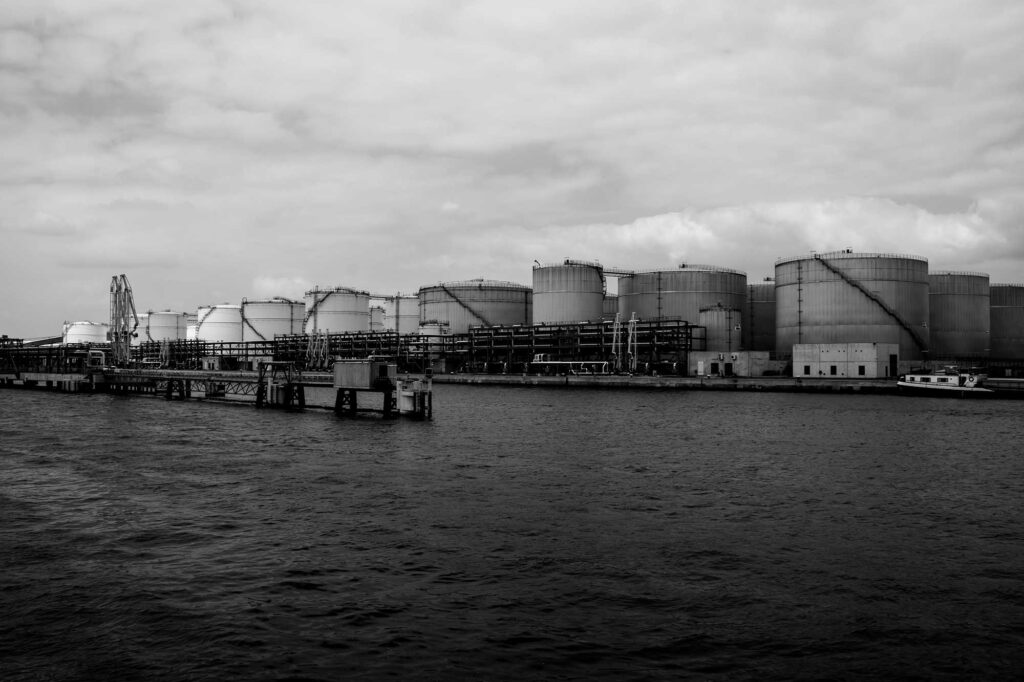
Total storage capacity is determined from the maximum quantity of fuel that needs to be available for a given period, the supply method and its security, batch size, operational convenience and future anticipated growth. The storage tank capacity for each airport should be carefully considered as it not only involves a considerable capital expenditure but also a significant investment in working capital cost of stock. Knowing the product supply rate (either pipeline flow or number of road bridgers, rail tankers, barges or ships per day), the time taken to fill a tank of a given size can be determined. During the time a tank is being filled and subsequently settled, fuel cannot be issued from it and therefore two tanks are the minimum required to ensure a continuous fueling service. For larger depots, a third tank is recommended so that one tank can be filling and one settling while the third is supplying into hydrant or loading refuellers.
A factor that should also be considered is the differing fuel uplifts and ground times for domestic (smaller, but frequent, uplifts) and international long-haul flights, schedule and charter services (seasonal peaks) and passenger and cargo aircraft (likely to park in remote apron areas). An assessment should also be made of the possibility of airlines ‘tankering’ and the likely effects this would have on the volumes.


Hydraulic Simulation
We are committed to a safe and economic handling of fuel. To control the inherent risks we have developed the simulator Kleopatra® for operators of fuel farm and hydrant systems, technical authorities and insurance companies.

It should be recognized that hydraulic analysis requires specialist knowledge, EI-1540.
Kleopatra® is globally proven technology to identify risks and shortcomings and acts as alarm system to avoid dangerous operating conditions.
Kleopatra® hydraulic studies detects reasons for pressure surges and pressure losses and as such provides the basis for a safe and economic design of your facility.
Either existing or new plant – Kleopatra® presents on the screen immediately the consequences of the change of parameters, operating conditions or configuration. This allows optimizing a facility at any stage of its life cycle.
Automation & Control
Automation design for tank farms focuses on creating economical, energy-saving systems that adhere to international standards, emphasize safety in hazardous environments, and ensure reliable operations, offering peace of mind.

Expert Travel Advisors

Competent design ensures economic and energy saving systems in full compliance to international approved standards and local regulation. Safety in a hazardous environment is the focus of our solutions.

Expert Travel Advisors

Robust Control Systems are designed for aviation fuel facilities and loved by the operators for a userfriendly clear structure.

An intelligent Automation protects plant and equipment and reduces the workload of the operator.

Site specific requirements are embedded in a standardized control environment.

hansaconsult Control Solutions support your normal day-to-day operations and a reliable handling of emergency situations.

Safety

Emergency Fuel Shut-Off system (EFSO)
Leak detection system for the fuel hydrant system / Tightness Control System incl DBBV
SCADA System including related equipment and fuel facility specific software
The redundant, fail safe and hot standby PLC control system including equipment and fuel facility specific software
Explosion proof remote I/O panels
Stress Analysis
Pipe stress analysis provides the necessary technique for engineers to design piping systems without overstressing & overloading the piping components & connected equipment.

Pipe stress analysis provides the necessary technique for engineers to design piping systems without overstressing & overloading the piping components & connected equipment.

Pipe stress analysis calculates the stress in a piping system subject to normal operating loads (Static Loads) such as:

Pipe stress analysis calculates the stress in a piping system subject to normal operating loads (Static Loads) such as:

And occasional loads (Dynamic Loads) such as:

Our Design tools are all connected, the 3D CAD Modeling system is connected with the Stress Analysis software, this enable us to efficiently check the piping system will all components and constrains in place, the analysis results are then fed back to the 3D Model.


Tightness Control System (TSC)
The world-wide patented state-of-the-art and the absolutely reliable leak detection procedure. TCS® Tightness Control System has been developed in 1982, especially for operation at Frankfurt Airport and is now proven at many airports worldwide.
Hydrant Systems
All our Airfields work are planned and designed in 3D environment in order to be part of the overall BIM model of the airfield utilities.

Aviation Fuel Hydrant System

Ongoing communications throughout the project between the system designer/consultant, the apron project designer/consultant and other stake holder are essential, 3D BIM Model ease the communications and the coordination works.

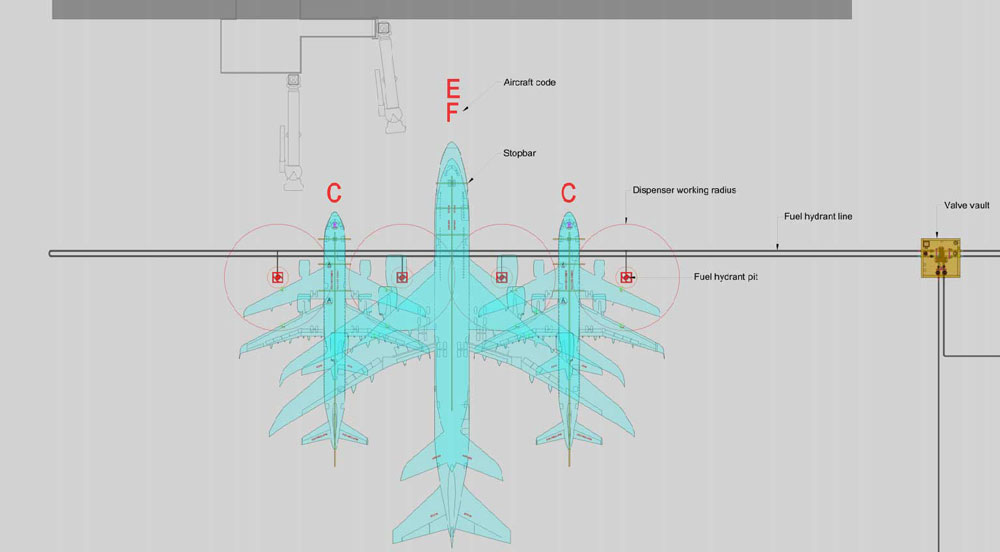
We use in-house developed Automated Hydrant Pit positional tool for optimum location selection based on aircraft position, aircraft code/type, refuellers types and operational constrains.

A wrong position of a hydrant fuel pit can result in taking the pit out-of-service, special consideration are taken to avoid such incidents.
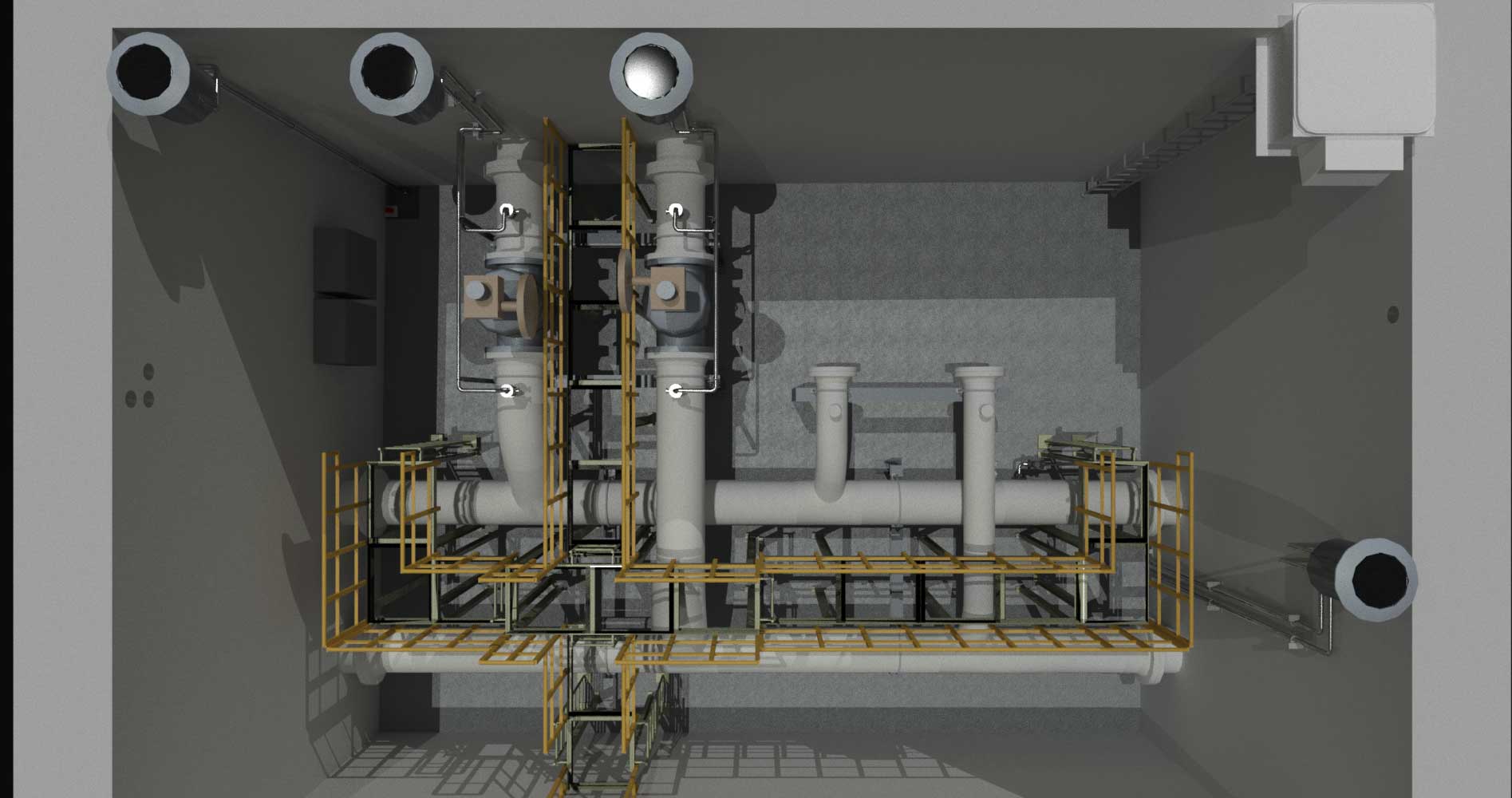
Valve Chambers

For easy operation of the hydrant system, the system should be divided into loops or sections, this is also a requirement by international standards (EI 1540 Design, construction, commissioning, maintenance and testing of aviation Fueling facilities). Isolation valve vaults are introduced into the system to facilitate the operation of the hydrant system.
Aviation Fuel Infrastructure Design
The Logical Model of the Fuel Depots are efficiently modeled into a full 3D Design layout, where suitability and fit can all be tested in a virtual world.

Integrated Engineering and 3D Design

The Engineering work & Hydraulic Analysis are translated to Smart Data into the Piping and Instrumentation diagram (P&ID), all components are smart and contains all the design parameters such as size, flow rate, medium, Pressure & Temperature ratings and standards, each component has a specific Tag no. that allow easier identification, the P&ID is then translated to a 3D Model where all components are connected and inherit the same properties.

Design Visualisation & Communication

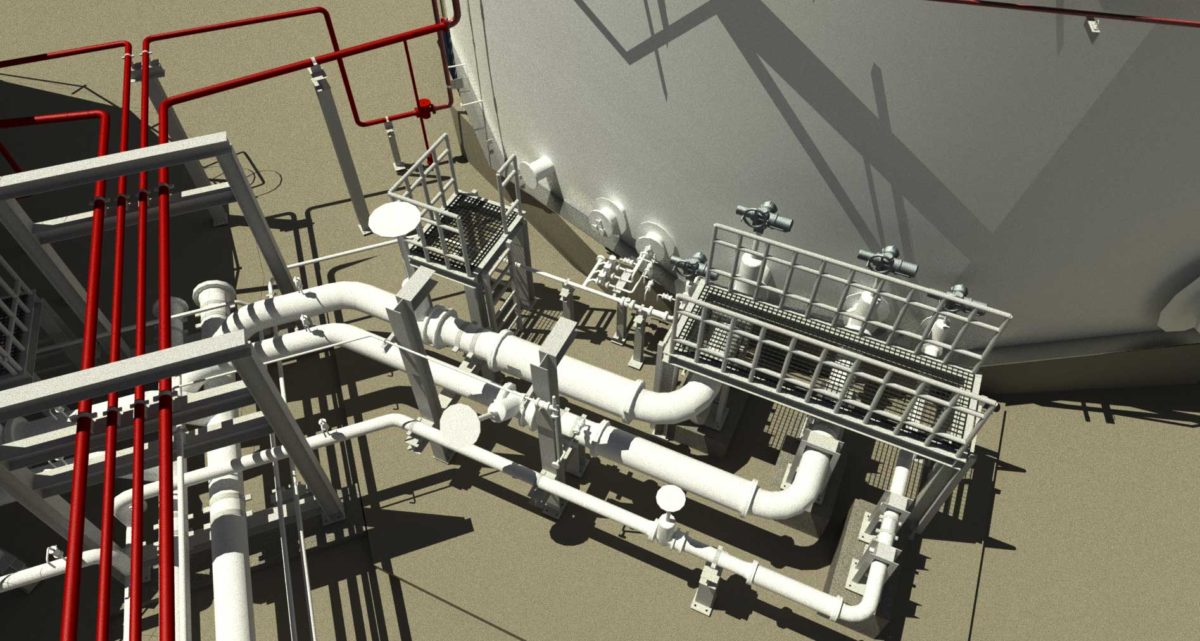
The 3D Model allow easier communication with all the project stakeholder by providing clear picture on the overall plant, it also facilitate the coordination with other projects designer/consultant for different disciplines.

Clash Free Design

The 3D Model allow easier communication with all the project stakeholder by providing clear picture on the overall plant, it also facilitate the coordination with other projects designer/consultant for different disciplines.

Reduce site rework

Higher quality design. the ability to perform multiple design checks across the entire design eliminates errors, and enables ‘right-first-time’ engineering.

Accurate materials information eliminates overordering and delays on site due to lack of required materials or information.
Maximized project quality

Clash checking and integrity checking ensure higher quality designs and less rework. Database driven drawing production achieves consistency between drawings, reports and design data base. Changes made in the Model is automatically reflected on the drawings and the bill of material.

Minimize Schedule times

Reduced site work, concurrent multi-location engineering, higher design efficiency and higher quality all combine to reduce schedule time. The ability to react quickly to major project changes is a key parameter in minimizing the project schedule.

Hello World 3

Lorem ipsum dolor sit amet, consectetur adipiscing elit. Ut elit tellus, luctus nec ullamcorper mattis, pulvinar dapibus leo.

Hello World 1

Lorem ipsum dolor sit amet, consectetur adipiscing elit. Ut elit tellus, luctus nec ullamcorper mattis, pulvinar dapibus leo.

Hello World 2

Lorem ipsum dolor sit amet, consectetur adipiscing elit. Ut elit tellus, luctus nec ullamcorper mattis, pulvinar dapibus leo.

Experience reliable and sustainable water supply solutions for residential, commercial, and agricultural needs with our expert services.